
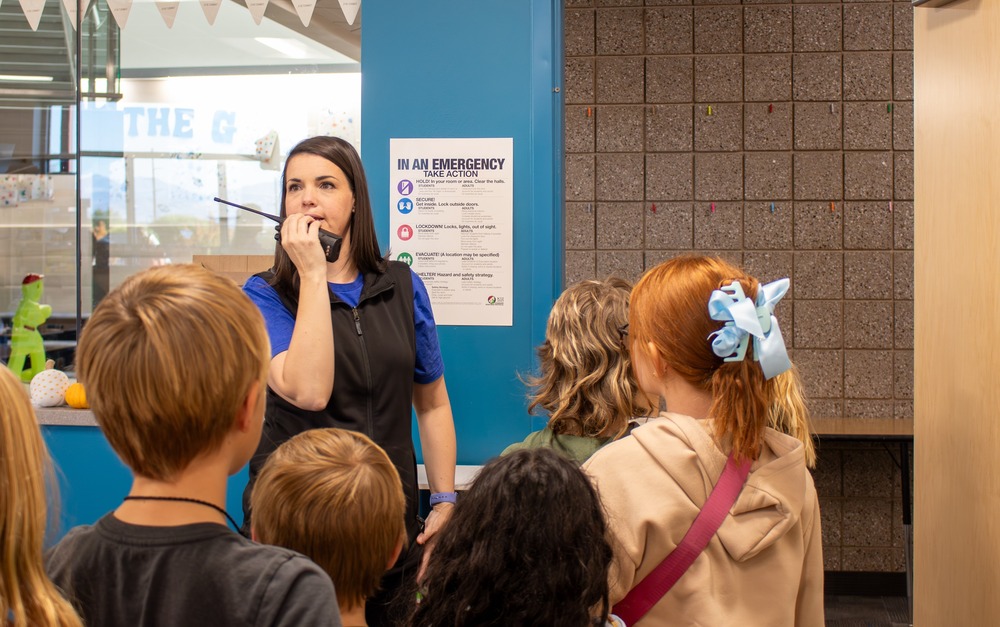
During a school emergency, clear communications make all the right connections.
Alpine School District has standardized its procedures for responding to emergencies and keeping parents informed throughout.
Types of Incidents
“We’ve developed and refined a process for responding to emergencies and communicating with parents and community members when they happen,” said Rich Stowell, communications director at Alpine School District.
Those situations are varied.
“Last year we worked through about 25 emergencies or disruptions in our schools,” said Joe Hayes, director of operations for Alpine School District. Hayes’s role includes overseeing safety programs and interfacing with law enforcement agencies.
The list of emergencies that Hayes’s team would respond to include wildlife on the loose, power outages, and gas leaks, all of which happened last year at various schools.
“Often the disruptions are relatively easy to resolve, but we still have to plan for the worst,” said Hayes.
Standard Response Protocol
More serious incidents will trigger the Standard Response Protocol (SRP), a system designed to provide consistent, clear, shared language and actions among all students, staff and first responders.
In the event of a SRP-related event, district office staff can send a message to parents within eight minutes of an incident being reported. Messages can go out quickly via text, email, and phone call. Principals or school staff can follow up with more detail, as necessary.
“Our priority is to keep parents informed, so they know their students are safe,” said Stowell. “When there is an emergency, or any situation that could cause concern for parents, we want them to trust us to care for their children.”
“While any particular school might not have an emergency that requires district or law enforcement response, we know we will have several such incidents among our 93 schools throughout the year,” added Hayes.
Last year, schools were EVACUATED four times and went into a SECURE status six times.
When district staff can take the lead communicating during serious incidents, it frees up school staff to manage the direct safety of students.
A Tool to Build Trust
Alpine uses a communications platform called Apptegy. At the district office, emergency operations personnel can send messages on behalf of the school and see who received them. It’s important that parents ensure contact information is accurate in Skyward.
"The Apptegy platform, paired with our district operations team, has transformed how we navigate emergent disruptions by allowing us to communicate instantaneously across multiple channels," said Ruthie Cheeseman, assistant principal at Grovecrest Elementary.
The communications team has preloaded templates in the messaging platform to speed up response times, and updates those templates as needed after each incident. Additionally, the messaging tool translates every message into the recipient’s preferred language.
“Having a clear, single point of contact allows me to report an issue immediately and pivot straight to managing the situation on the ground,” said Cheeseman. “It gives me confidence knowing that district leadership is instantly mobilized to handle communications and operational support,”
“Open, proactive communication with parents is the foundation of the trust and transparency we cultivate in our school community,” said Cheeseman, whose school evacuated last year as a precaution due to an unidentified odor.
“When we actively build trust with the families we serve, and with our law enforcement partners, our responses become better, quicker, and more robust, so we can recover more quickly and get back to the business of learning,” said Stowell.
A Collaborative Process
Behind every procedure is a commitment to keeping safety protocols simple and adaptable for campus staff.
“It’s important for us to have simple procedures that are flexible enough to apply to a variety of emergency situations," said Hayes.
Those streamlined procedures have been in the works for the past two years, as staff have navigated some challenging emergencies in schools.
“We now have a process that involves more of the right people in our district who can help us respond and recover,” said Stowell. “And because we collaborate well, we are more likely to look for improvements to our process.”
While the district helps manage the process and assists with messaging, school leaders still play a critical role in communicating with families.
“School administrators can build those relationships better than we can at the district office,” said Hayes. “We rely on them to know their community needs and help parents know what the emergency procedures are.”
Established protocols build a safer, predictable environment for everyone. "From an administrative standpoint, streamlined emergency protocols are essential for maintaining a safe, calm school climate," Cheeseman said.